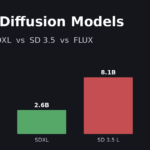
Stable Diffusion Models: SD 1.5 vs SDXL vs SD 3.5 vs FLUX
Compare stable diffusion models SD 1.5, SDXL, SD 3.5 and FLUX.1: architecture, text encoders, latent channels, parameters, licenses, and which to use.
Compare stable diffusion models SD 1.5, SDXL, SD 3.5 and FLUX.1: architecture, text encoders, latent channels, parameters, licenses, and which to use.
How does Stable Diffusion paint an AI artwork? Understanding the tech behind the rise of AI-generated art. Originally posted on My Medium. Most of the recent AI art found on the internet is generated using the Stable Diffusion model. Since it is an open-source tool, any person can easily create fantastic art illustrations from just […]
How does AI artwork work? Understanding the tech behind the rise of AI-generated art. Originally posted on My Medium. The rise of the Diffusion Model can be regarded as the main factor for the recent breakthrough in the AI generative artworks field. In this article, I’m going to explain how it works with illustrative diagrams. […]
Originally posted on My Medium. While everyone is using Stable Diffusion to generate artwork, have you ever realized there is a watermark in the generated images? If you are new to it, first read how Stable Diffusion works. Invisible Watermark The official Stable Diffusion code uses a Python library called invisible-watermark to embed an invisible […]

Paper Explained: Diagonal Attention and Style-based GAN for Content-Style Disentanglement in Image Generation and Translation Originally posted on My Medium. Introduction In image generation, Content-Style Disentanglement has been an important task. It aims to separate the content and style of the generated image from the latent space that is learned by a GAN. This DiagonalGAN […]

Paper Explained: JoJoGAN — One-Shot Face Stylization Originally posted on My Medium. Introduction JoJoGAN is a style transfer procedure that lets you transfer the style of a face image to another style. It accepts only one style reference image and quickly produces a style mapper that accepts an input and applies the style to the […]
Originally posted on My Medium. In this article, I will compare and show you the evolution of StyleGAN, StyleGAN2, StyleGAN2-ADA, and StyleGAN3. Note: some details will not be mentioned since I want to make it short and only talk about the architectural changes and their purposes. StyleGAN The purpose of StyleGAN is to synthesize photorealistic/high-fidelity […]

Paper Explained: StyleGAN3 — Alias-Free Generative Adversarial Networks Originally posted on My Medium. The StyleGAN3 paper is pretty hard to understand. In this article, I tried my best to reorganize it and explain it step by step. Hope you understand it better after reading this. If you want to know the difference and evolution of StyleGAN, […]
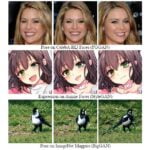
Paper Explained: SeFa — Closed-Form Factorization of Latent Semantics in GANs Originally posted on My Medium. Motivation The generator in GANs usually takes a randomly sampled latent vector as the input and generates a high-fidelity image. By changing the latent vector , we can change the output image. However, in order to change a specific attribute in the output […]
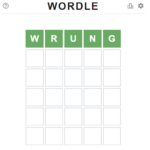
2 ways to quickly solve the viral puzzle Originally posted on My Medium. Unlike my usual articles, this is not about deep learning or computer vision. This is about a popular web game called Wordle. Since I have been seeing many people sharing their daily Wordle results on social media recently, it makes me curious to […]